


Pharr Criminal Defense Lawyers
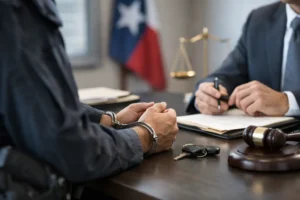
Former State Prosecutors Fighting for Your Rights
Being arrested, accused of a crime, or contacted by law enforcement can be frightening and overwhelming. You may be unsure whether you should answer questions, allow officers to conduct a search, accept a plea agreement, or try to explain your side of the story.
Before making decisions that could affect your freedom and future, speak with an experienced criminal defense attorney.
The Tijerina Law Firm, P.C. represents individuals facing criminal investigations and charges in Pharr, Texas, and throughout Hidalgo County. As former state prosecutors, the firm’s attorneys understand how the government investigates criminal allegations, evaluates evidence, files charges, and prepares cases for court.
That experience can be invaluable when your reputation, employment, family, driver’s license, immigration status, and freedom may be at risk.
Criminal Defense Representation for People in Pharr, Texas
A criminal charge is not the same as a criminal conviction. Being arrested does not mean that you are guilty, and the government must prove its case against you beyond a reasonable doubt.
You also have important constitutional rights, including the right to remain silent, the right to consult an attorney, the right to challenge unlawfully obtained evidence, and the right to defend yourself in court.
The Tijerina Law Firm, P.C. can evaluate the allegations against you, investigate how the case was handled, review the prosecution’s evidence, and help you understand your available defense options.
Depending on the circumstances, a criminal defense attorney may be able to:
- Challenge an unlawful traffic stop, detention, arrest, or search
- Question the credibility of witnesses
- Identify inconsistencies in police reports
- Review body-camera, dash-camera, and surveillance footage
- Challenge improperly handled physical evidence
- Examine laboratory and chemical-testing procedures
- Negotiate for reduced charges or penalties
- Pursue the dismissal of unsupported charges
- Present your case at trial when necessary
- Determine whether diversion, probation, or another alternative may be available
Every criminal case is different. The appropriate strategy will depend on the charges, the evidence, your criminal history, the circumstances of the arrest, and your personal goals.
What Should You Do If You Are Arrested in Pharr?
An encounter with law enforcement can be extremely stressful. Officers may ask questions in a friendly or informal manner, but anything you say may become part of the investigation and could later be used against you.
People sometimes believe that cooperating fully will immediately prove their innocence. Unfortunately, attempting to explain the situation without legal advice can create additional problems. A nervous, incomplete, or misunderstood statement may be interpreted in a way you never intended.
If you are arrested or questioned by police, remember the following steps.
Remain Calm and Respectful
Do not physically resist an officer, run away, threaten anyone, or interfere with an arrest. Even when you believe the officer is mistaken, resisting can lead to additional criminal charges.
You can protect your rights without becoming confrontational.
Clearly Invoke Your Right to Remain Silent
You generally have the right not to answer questions about alleged criminal conduct. Clearly tell officers:
“I am exercising my right to remain silent. I want to speak with an attorney.”
After invoking your rights, avoid discussing the allegations with officers, investigators, other detainees, friends, or anyone else without first speaking to your lawyer.
Depending on the circumstances, you may still be required to provide basic identifying information.
Ask for a Criminal Defense Attorney
Do not assume that requesting a lawyer will make you appear guilty. Asking for legal representation is a constitutional right.
Once you request an attorney, remain silent and wait for legal guidance. The Tijerina Law Firm, P.C. can advise you during an investigation and represent you through each stage of the criminal process.
Do Not Consent to a Search Without Legal Advice
Law enforcement officers may ask for permission to search your vehicle, home, phone, bag, or other property. You have the right to refuse consent to a voluntary search.
Police may sometimes conduct a search with a warrant or under a recognized exception to the warrant requirement. However, voluntarily consenting to a search can make it more difficult to challenge that search later.
You can respectfully say:
“I do not consent to any searches.”
Do not physically interfere if officers conduct the search despite your objection. Your attorney can later evaluate whether the search was lawful and whether the resulting evidence can be challenged.
Do Not Discuss Your Case on Social Media
Do not post about your arrest, the alleged victim, witnesses, police officers, evidence, or court proceedings. Prosecutors and investigators may review social media posts, photographs, messages, location information, and comments.
Even a post intended as a joke or an attempt to defend yourself could be taken out of context and used against you.
Contact a Pharr Criminal Defense Lawyer Promptly
The sooner an attorney becomes involved, the sooner the defense can begin protecting evidence, interviewing witnesses, reviewing recordings, and identifying possible weaknesses in the prosecution’s case.
Waiting can allow surveillance footage to be erased, witnesses’ memories to fade, or other important evidence to disappear.
Why You Should Speak With an Attorney Before Accepting a Plea Agreement
A prosecutor may offer a plea agreement that initially appears to resolve the case quickly. However, pleading guilty or no contest can result in consequences that last far beyond the sentence imposed by the court.
Before accepting any plea agreement, you should understand:
- The exact offense to which you would be pleading
- Whether the conviction can be enhanced in a future case
- Whether jail, probation, fines, or community service may be imposed
- Whether your driver’s license could be suspended
- Whether the conviction could affect professional licensing
- Whether it could affect employment or housing
- Whether it could create immigration consequences
- Whether sex-offender registration could be required
- Whether you would lose the right to possess a firearm
- Whether the offense could be sealed, expunged, or otherwise restricted later
The Tijerina Law Firm, P.C. can review the evidence and explain the potential risks and benefits before you make a decision.
How a Criminal Defense Lawyer Can Help
A strong criminal defense involves much more than appearing in court. Your lawyer should understand the allegations, investigate the facts, evaluate the prosecution’s evidence, and develop a strategy based on your specific circumstances.
Investigating the Arrest
Your attorney may examine:
- Why law enforcement initially stopped or approached you
- Whether the officer had reasonable suspicion or probable cause
- Whether your constitutional rights were respected
- Whether statements were obtained unlawfully
- Whether a search was supported by consent, a warrant, or a legal exception
- Whether officers followed proper arrest and evidence-handling procedures
Reviewing the Evidence
The prosecution may rely on police reports, witness statements, photographs, surveillance video, body-camera footage, laboratory reports, phone records, social media activity, or physical evidence.
A criminal defense attorney can determine whether the evidence is reliable, complete, relevant, and legally admissible.
Challenging the Prosecution’s Case
Potential defense issues may include:
- Mistaken identity
- False accusations
- Unreliable witnesses
- Lack of intent
- Self-defense
- Defense of another person
- Insufficient evidence
- Illegal searches or seizures
- Improper police questioning
- Problems with forensic testing
- Broken chains of custody
- Inconsistent statements
- Constitutional violations
The existence of one or more of these issues does not automatically guarantee that charges will be dismissed. However, identifying weaknesses in the case can significantly affect negotiations, pretrial motions, and trial strategy.
Negotiating for a More Favorable Resolution
When dismissal is not immediately available, an attorney may negotiate with prosecutors for a reduction in charges, a more favorable sentencing recommendation, probation, diversion, treatment, or another resolution.
The best option will depend on the facts of the case and the client’s priorities.
Preparing for Trial
Some cases cannot be resolved through negotiation. When a trial is necessary, the defense must be prepared to question witnesses, challenge evidence, present applicable defenses, and hold the government to its burden of proof.
Criminal Charges We Handle in Pharr, Texas
The Tijerina Law Firm, P.C. assists people facing a wide variety of misdemeanor and felony allegations.
DWI and DUI-Related Charges
A DWI arrest can affect your freedom, finances, and ability to drive. These cases may involve traffic-stop issues, field sobriety exercises, breath tests, blood tests, officer observations, and video evidence.
An attorney can examine whether the initial stop was lawful, whether tests were administered properly, and whether the government can prove intoxication beyond a reasonable doubt.
Drug Possession and Controlled Substance Charges
Drug cases may involve allegations concerning marijuana, cocaine, methamphetamine, prescription medication, or other controlled substances.
The defense may review whether the search was lawful, whether the accused knowingly possessed the substance, whether multiple people had access to the location, and whether the laboratory results and chain of custody are reliable.
Assault and Family-Violence Charges
Assault cases often depend on conflicting accounts of what happened. The defense may need to investigate self-defense, witness credibility, injuries, photographs, recordings, prior statements, and the relationship between the people involved.
Family-violence allegations can also affect protective orders, firearm rights, employment, child-custody proceedings, and immigration matters.
Sex Crime Allegations
Sex crime accusations can cause immediate and devastating damage to a person’s reputation. A conviction may carry severe prison exposure and registration requirements.
These cases require careful handling, a detailed investigation, and strict confidentiality. The defense may examine communications, digital evidence, witness credibility, timelines, forensic evidence, and the circumstances surrounding the accusation.
Theft, Burglary, and Property Crimes
Property offenses may range from misdemeanor shoplifting allegations to serious felony burglary charges. Important issues can include identity, ownership, intent, consent, the value of the property, surveillance footage, and whether the accused knowingly participated in the alleged conduct.
Trespassing Charges
Trespassing cases may involve disputes about whether notice was properly given, whether the person had permission to be on the property, or whether the accused knowingly remained after consent was withdrawn.
White-Collar Criminal Charges
White-collar investigations may involve fraud, embezzlement, financial records, business transactions, computer data, identity theft, or allegations of misappropriated funds.
These cases can be document-intensive and may require a detailed review of accounting records, emails, contracts, banking information, and electronic evidence.
Juvenile Criminal Charges
A juvenile accusation can affect a young person’s education, future opportunities, and family. Juvenile cases require representation that addresses both the immediate allegations and the child’s long-term well-being.
Other Misdemeanor and Felony Cases
The firm can also evaluate cases involving:
- Weapons allegations
- Evading or resisting arrest
- Criminal mischief
- Probation violations
- Protective-order violations
- Harassment or stalking
- Fraud
- Organized criminal activity
- Domestic violence
- Driving offenses
- Other Texas misdemeanor and felony charges
The Consequences of a Texas Criminal Conviction
A conviction can involve much more than jail or a fine. Depending on the offense, consequences may include:
- County jail or state prison
- Probation or community supervision
- Court costs and fines
- Restitution
- Community service
- Driver’s license suspension
- Mandatory classes or treatment
- Difficulty obtaining employment
- Loss of professional licenses
- Housing restrictions
- Immigration consequences
- Firearm restrictions
- Sex-offender registration
- Damage to personal and professional relationships
- Enhanced penalties for future offenses
Because these consequences can follow you for years, you should not treat any criminal charge as a minor matter.
Expunctions and Orders of Nondisclosure in Texas
An arrest record can create problems even when a case was dismissed or did not result in a conviction. Employers, landlords, licensing agencies, and others may be able to discover the arrest through a background check.
Texas law may allow some individuals to seek an expunction or an order of nondisclosure.
What Is an Expunction?
An expunction may allow eligible individuals to have certain arrest and court records destroyed or removed from public access. Eligibility depends on several factors, including how the case ended, the specific charge, and whether required waiting periods have passed.
Dismissed charges do not automatically qualify every person for an expunction.
What Is an Order of Nondisclosure?
An order of nondisclosure generally restricts public access to qualifying criminal records. It does not necessarily destroy the records, and certain government agencies may still be able to access them.
Some individuals who successfully completed deferred adjudication may qualify, but eligibility depends on the offense and other circumstances.
The Tijerina Law Firm, P.C. can review your criminal history and determine whether you may be eligible for an expunction or nondisclosure order.
Former State Prosecutors Serving Pharr and Hidalgo County
Experience as a former prosecutor provides valuable insight into how the state may approach a criminal case. It can help a defense attorney anticipate the prosecution’s strategy, identify weaknesses in the evidence, and evaluate how a case may be negotiated or tried.
The attorneys at the Tijerina Law Firm, P.C. use their prosecutorial and criminal-defense experience to represent people accused of crimes in Pharr and surrounding Hidalgo County communities.
The firm is committed to giving each case careful attention and providing clients with clear explanations of their rights, risks, and options.
Speak With a Pharr Criminal Defense Lawyer
You do not have to face criminal charges alone. Whether you have already been arrested, learned that a warrant may have been issued, or have been contacted by investigators, getting legal advice as early as possible can help protect your rights.
Do not make statements, consent to searches, or accept a plea agreement without understanding the potential consequences.
Contact the Tijerina Law Firm, P.C. to discuss your case with experienced criminal defense attorneys serving Pharr, Texas. The firm can review the allegations, examine the available evidence, explain your legal options, and help you determine the best path forward.
